The Real Reason More People Are Not Building ADUs Yet
Accessory Dwelling Units, also known as ADUs, are getting more attention across the country. Cities, counties, and even federal lawmakers are talking more about housing shortages, affordability, backyard homes, garage conversions, small rental units, and extra living space for families.
That is good news.
But from what we see in real conversations with homeowners, the biggest reason more people are not moving forward with ADUs is not always zoning.
In many cases, the real challenge is much simpler:
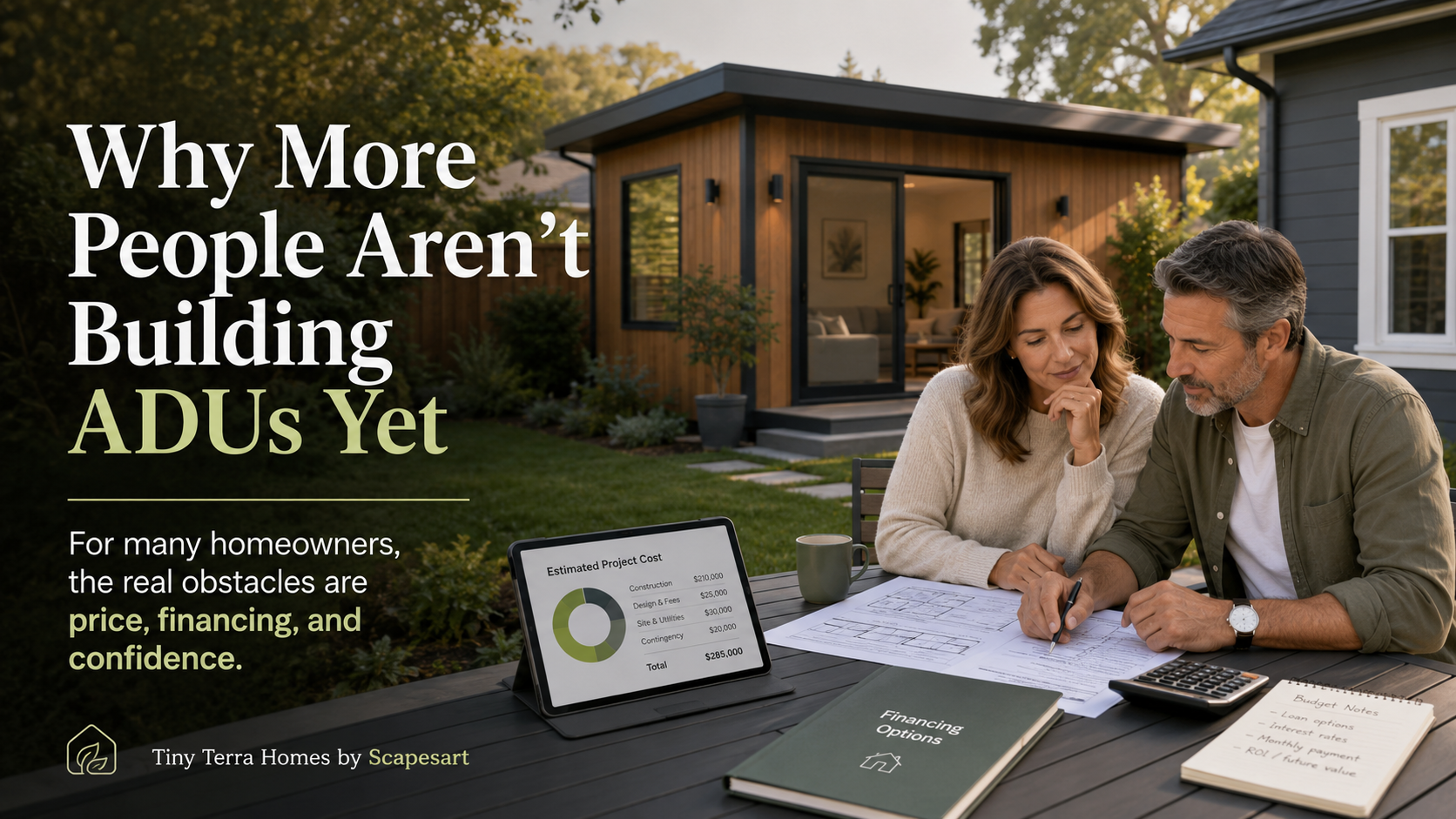
People like the idea, but they are not sure they can afford it.
They may want a backyard home for a parent, a rental unit, a guest house, a home office, or a long-term investment. But once they understand the real cost of construction, utilities, foundation, permits, finishes, and site work, the decision becomes more serious.
That is where the conversation changes.
Zoning Matters, But It Is Not Always the First Obstacle
Yes, zoning is important.
Before anyone builds an ADU, the property must be checked for local rules. Every city can be different. Some cities allow detached ADUs. Some allow garage conversions. Some have size limits, setback rules, parking requirements, owner-occupancy rules, utility requirements, or restrictions based on the lot.
That is why location always matters first.
But in many real-life situations, zoning is not the reason people stop.
Many homeowners stop because they do not yet have a clear answer to questions like:
- How much will this really cost?
- Can I finance it?
- Will the monthly payment make sense?
- Can I rent it?
- Will it increase the value of my property?
- Is this a smart investment or just an expensive dream?
- Can I build something smaller first?
- Can I do a shell now and finish later?
These are the questions that usually decide whether a project moves forward or not.
The Biggest ADU Blocker Is Often Price Shock
A lot of homeowners start with a simple idea:
“I want to build a small house in my backyard.”
But an ADU is still a real building. It may be smaller than a regular house, but it still needs many of the same parts:
Permits
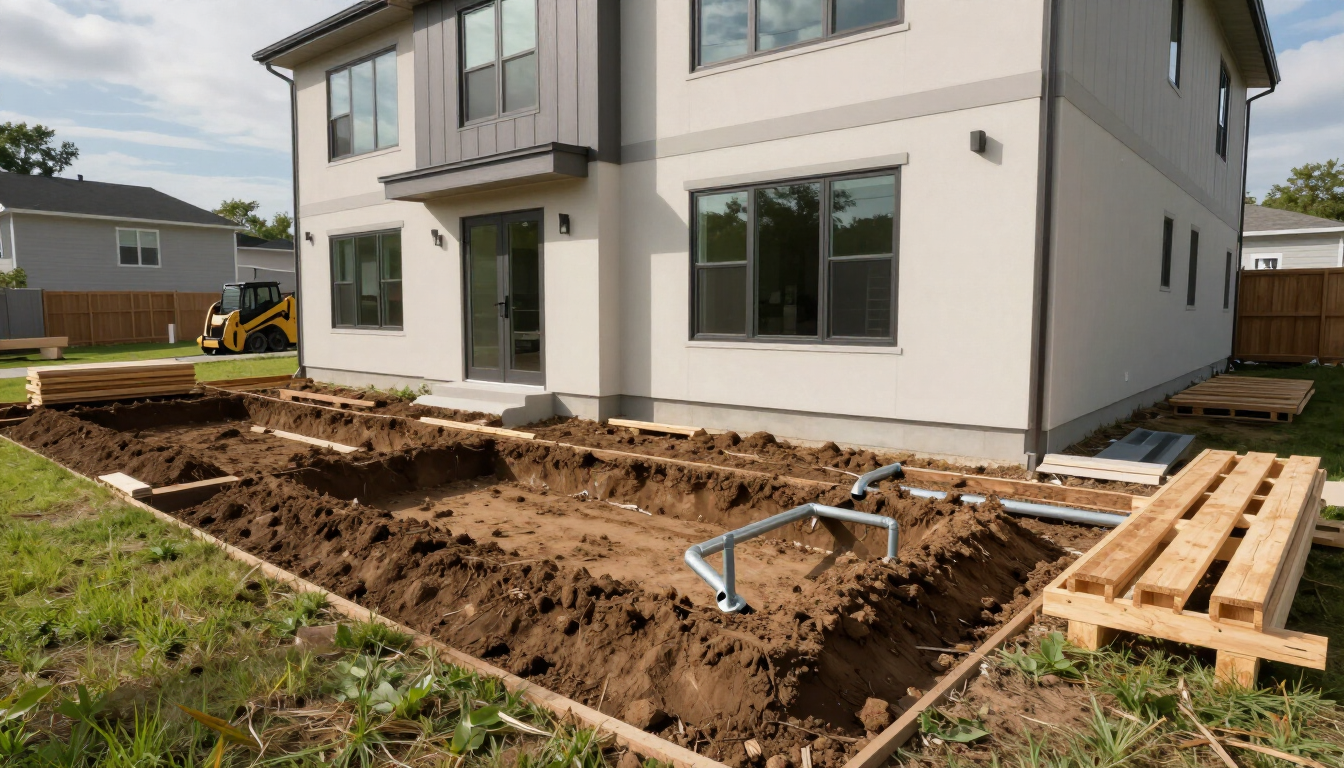
Site preparation
Foundation
Framing
Roofing
Windows and doors
Electrical
Plumbing
HVAC
Insulation
Interior finishes
Utility connections
Driveway or access considerations
Drainage
Inspections
That is why ADUs are not cheap, even when they are small.
A realistic starting point for many site-built ADU projects can begin around
$185 per square foot, and the final price can go higher depending on size, design, foundation type, finish level, utility distance, soil conditions, city requirements, and access to the building area.
For example, a simple 600-square-foot ADU may sound small, but at $185 per square foot, that already puts the construction range around $111,000 before extra site-specific costs are fully understood.
That does not mean the project is impossible.
It means homeowners need realistic numbers early, before they spend money on drawings or make emotional decisions.
Financing Is the Missing Piece for Many Homeowners
Many people want an ADU. Fewer people are ready to write a large check for one.
That is why financing is one of the most important parts of the ADU conversation.
Some homeowners may use savings. Others may use a home equity loan, HELOC, construction loan, refinance, family investment, private financing, or a phased construction plan.
But many homeowners do not know where to start.
They may have equity in the property, but they are unsure how to use it. They may have income, but they are afraid of adding another payment. They may want rental income, but they do not know if the rent will justify the cost.
This is why the ADU conversation should not only be about design.
It should also be about financial direction.
Before starting drawings, homeowners should understand:
What price range fits the property
What type of ADU makes sense
What financing options may be available
What monthly payment could look like
What rental income may be realistic
What phased options could reduce pressure
What improvements may increase long-term property value.
An ADU is not just a construction project. It is a financial decision.
Some People Are Interested, But Not Ready Yet
Some people are ready now. They have cash, financing, or a strong reason to build.
Others are interested, but they need more information before making a decision.
And some people are only dreaming.
A good ADU planning process should help separate those groups early.
The goal is not to pressure people. The goal is to give them clarity.
A homeowner should know whether they are looking at a real project, a future project, or an idea that needs more financial planning before moving forward.
That saves time, money, and frustration for everyone.
Why a Feasibility and Budget Roadmap Should Come Before Drawings
Many people think the first step is to hire someone to draw plans.
That can be a mistake.
Drawings are important, but they should not come before understanding the property, the city rules, the budget range, the utility situation, and the construction path.
A better first step is an ADU Feasibility and Budget Roadmap.
This type of roadmap helps answer the most important questions first:
Can this property support an ADU?
What type of ADU is most realistic?
What size makes sense?
What are the likely city restrictions?
What foundation option may work best?
Where are utilities located?
What budget range should the homeowner expect?
What are the possible construction phases?
What financing questions should be answered before design?
This allows homeowners to make smarter decisions before investing in full architectural plans, engineering, permit drawings, or construction commitments.
The Smarter ADU Conversation: Location First, Money Second
At Tiny Terra Homes by Scapesart, we believe the ADU conversation should start with two important steps.
First: location.
The city, county, lot size, setbacks, utilities, and zoning rules matter. Without the property location, no one can give a responsible answer about what can be built.
Second: money.
Once the property looks possible, the next question is whether the budget and payment path make sense.
A homeowner does not need to have every dollar figured out on day one, but they do need to understand the realistic cost range and how they might pay for the project.
That is why we believe a strong ADU process should ask:
Where is the property?
What do you want to build?
What is the purpose of the ADU?
What budget range are you comfortable with?
How do you plan to pay for it?
Are you open to phased options?
Would rental income be part of the plan?
These questions help create a realistic path instead of a confusing conversation.
The Future of ADUs Is Still Strong
Even with cost and financing challenges, the future of ADUs is strong.
Families need more flexible housing. Parents are aging. Adult children are staying home longer. Rental prices are high. Property owners are looking for ways to create income. Many people want extra living space without moving.
ADUs can help with all of that.
But the industry needs to be honest.
The opportunity is real, but the numbers must make sense.
The best ADU projects happen when the homeowner understands the property, the budget, the financing path, and the long-term purpose of the project.
That is why planning matters.
Before You Build, Start With a Clear Plan
If you are thinking about building an ADU, garage conversion, guest house, backyard cottage, or extra living space, do not start with drawings first.
Start with clarity.
Find out what your property can support. Understand the realistic price range. Explore your financing options. Compare different sizes and construction approaches. Then decide if the project makes sense before moving forward.
A good ADU plan should protect you from wasting money, making assumptions, or starting a project without knowing the real path.
At Tiny Terra Homes by Scapesart, we help homeowners begin with a practical roadmap so they can make better decisions before construction.
Because the real question is not only:
“Can I build an ADU?”
The better question is:
“Can I build the right ADU, at the right price, with the right financial plan?”
That is where a smart project begins.
Ready to Explore an ADU?
If you are considering an ADU or extra living space, the first step is to understand your property and your budget.
Tiny Terra Homes by Scapesart can help you review the basic feasibility, estimated price range, and next steps before you spend money on full drawings or construction.
Start with a clear plan. Then build with confidence.
Author Disclosure:
This article was published under the authorship of Julian Gomez. Artificial intelligence tools were used to assist with research organization, drafting support, and editing. The final content, opinions, business perspective, and publishing decision were reviewed and approved by Julian Gomez. AI was used as a support tool, not as the author.