How ADU Utility Costs Affect Your Build Price (2026)
ADU utility costs are determined by the distance from the primary dwelling, sewer line depth, and existing electrical capacity. Factors such as trenching through rocky soil, plumbing routes, and necessary panel upgrades typically add $5,000 to $20,000 to build-to-order projects. These site-specific variables directly influence the final construction estimate.
When you are looking at Pricing & Packages for a new Accessory Dwelling Unit (ADU) or tiny home in the Kansas City Metro, the number you see on the sticker is rarely the total investment. For serious prospects, the most frustrating part of comparing contractor estimates is the wide variance in "site preparation" costs. You might get one quote for $120,000 and another for $145,000 for the exact same floor plan. Often, the difference isn't the quality of the cabinets or the flooring—it is what lies beneath the ground between your main house and your new living space.
Why does distance from the main house matter?
The distance between your primary residence and the ADU is the single greatest variable in utility budgeting. Most ADUs function as "sub-units," meaning they pull their power, water, and sewer connections from the existing infrastructure of the main house. The further away the unit sits, the higher the cost for every linear foot of conduit and pipe.
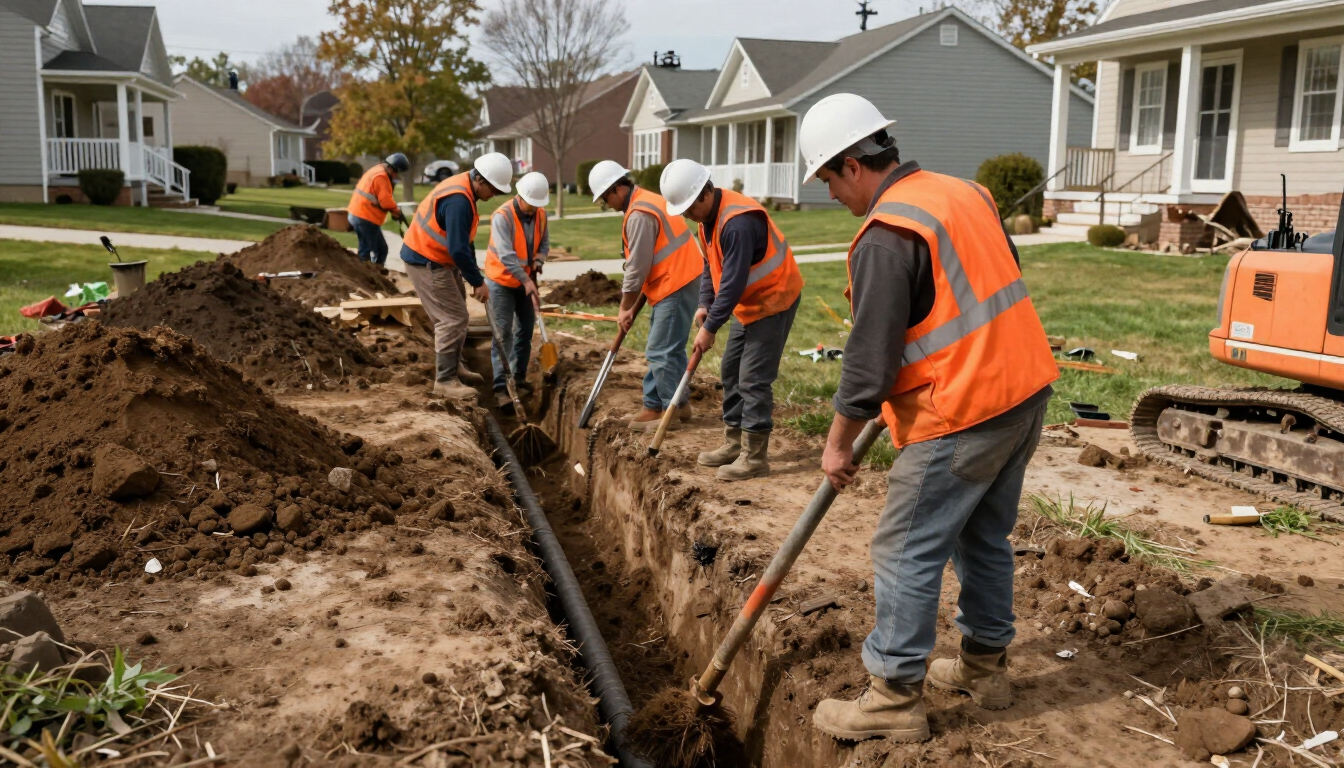
Trenching is more than just digging a hole. In the Kansas City Metro, our soil is notorious for its high clay content, which can expand and contract significantly. If your ADU is 50 feet away from the main house, you aren't just paying for 50 feet of pipe; you are paying for the labor of a mini-excavator, the backfill material, the bedding to protect the pipes, and the restoration of your yard.
Consider these distance-related factors:
- Cost of copper wire for long electrical runs.
- Pressure loss in water lines over distance.
- The volume of gravel needed for backfilling.
- Labor hours for manual digging near existing trees.
- Repairing hardscaping like patios or walkways.
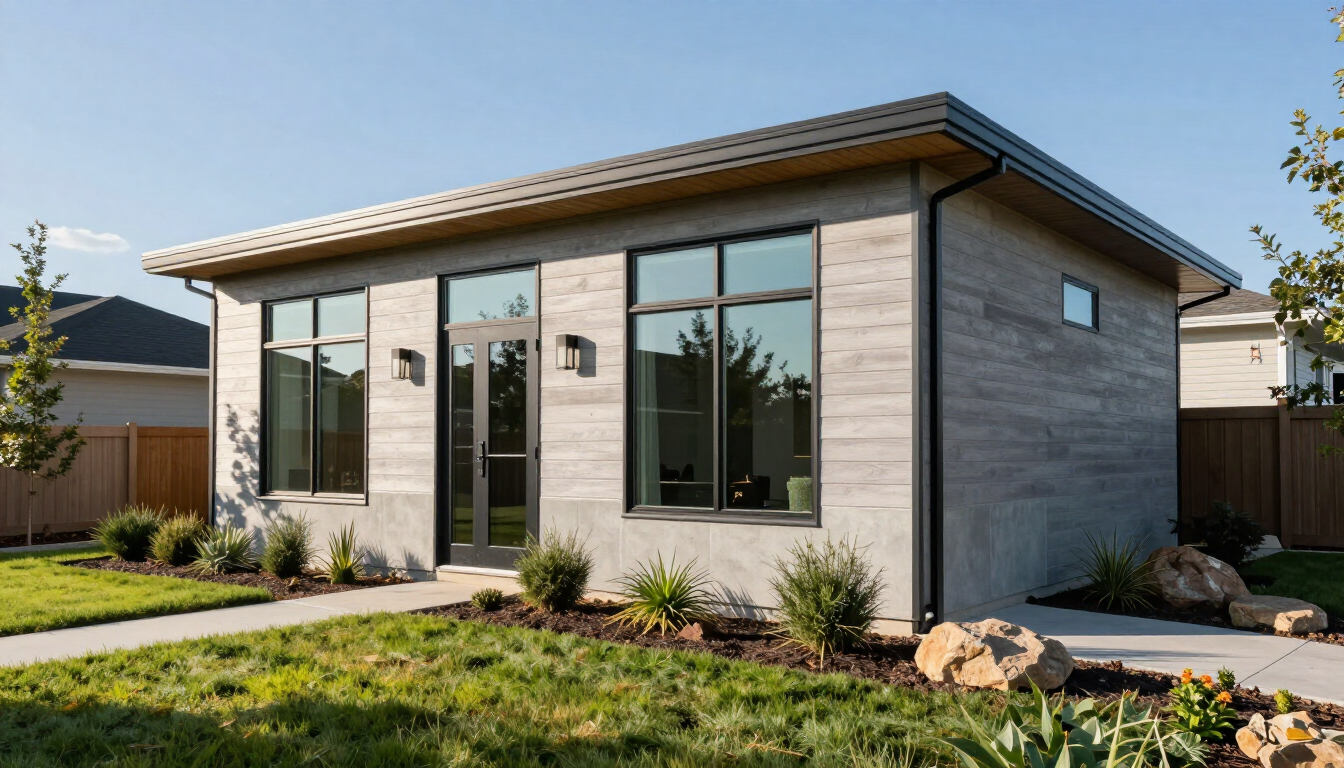
If your ADU is positioned at the far back corner of a deep lot, you could easily spend an extra $8,000 just in linear footage costs compared to a unit placed directly behind the garage. This is why we encourage clients to look at their Project Gallery to see how placement affects the overall site layout and utility strategy.
The Hidden Costs of Trenching and Excavation
Excavation is where many "guaranteed" prices start to fall apart. When a contractor starts digging in your backyard, they are entering the unknown. While we have extensive experience as an ADU Builder in Overland Park, KS and surrounding areas, the subsurface conditions can change from one block to the next.
In some parts of the metro, you hit solid limestone just two feet down. If your sewer line needs to be four feet deep to maintain a proper slope, but we hit rock at two feet, the cost shifts from standard excavation to specialized rock hammering. This process is loud, slow, and expensive. Furthermore, excavation must account for existing underground obstacles. Old irrigation lines, forgotten septic tanks, or massive tree roots from a century-old oak can all complicate the path.
Proper excavation ensures that your foundation is stable and your utilities are protected from the freeze-thaw cycles of the Midwest. Without professional grading and site prep, you risk water pooling around your ADU foundation, which can lead to structural issues within just a few years. We prioritize a "build-to-order" philosophy that treats your specific land as the foundation of the budget.
How does sewer depth impact your ADU budget?
Sewer connectivity is often the most technical and expensive part of utility work. To move waste from the ADU to the city main or the existing house line, you generally rely on gravity. This means the sewer pipe must slope downward at a specific angle—usually 1/4 inch per foot. If your backyard is flat, or worse, if the ADU is located at a lower elevation than the main house connection, gravity won't work.
This is where sewer depth becomes a financial pivot point. If the main sewer line leaving your house is shallow (only 3 or 4 feet deep), and your ADU is 60 feet away, the math of the slope might not add up. In these cases, we have two options: dig the ADU line deeper, which might require a very deep and expensive trench, or install a sewer ejector pump system.
A sewer ejector pump is a specialized tank and pump system that grinds waste and pumps it uphill to the main line. While effective, these systems add $3,000 to $5,500 to the initial build cost and require ongoing maintenance. If you are building an ADU in Kansas City MO , our team will analyze the topography of your lot during the preconstruction phase to determine which path is most cost-effective.
Does your electrical panel need an upgrade?
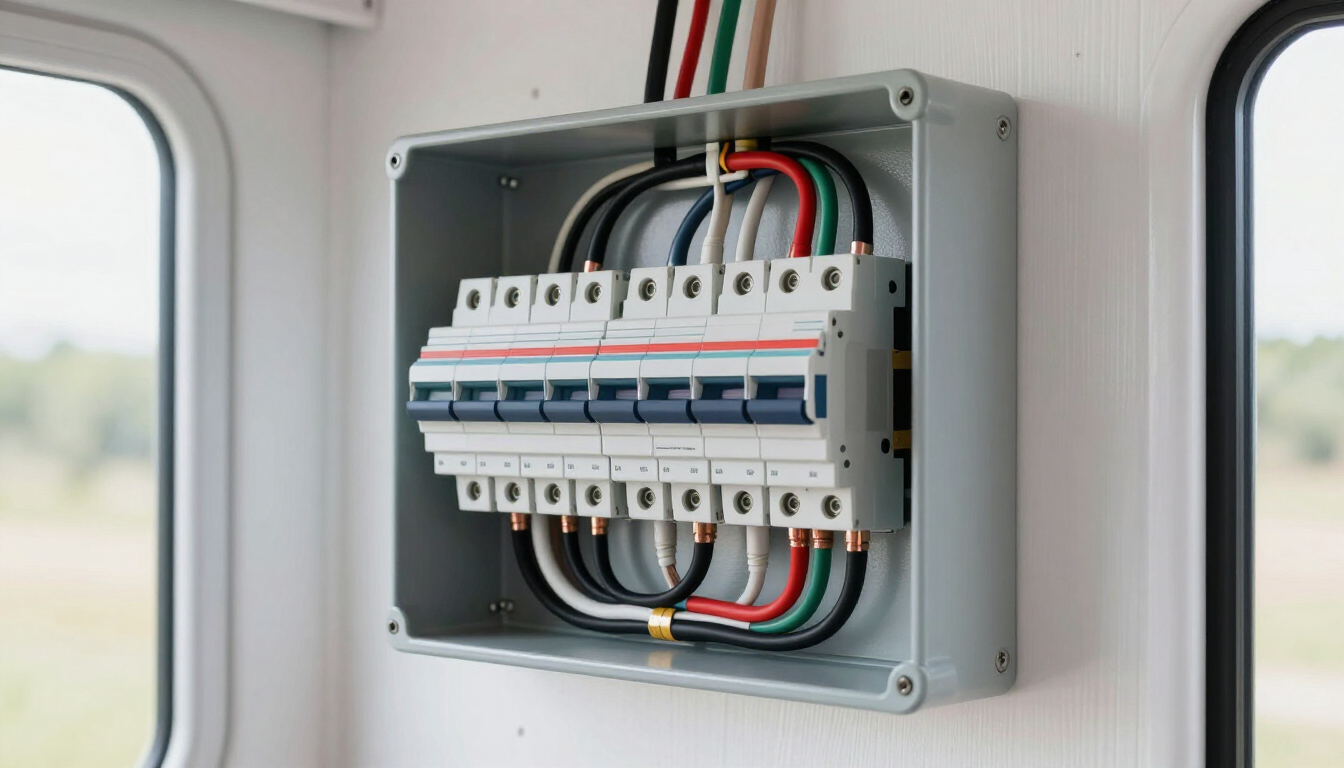
Most older homes in the Kansas City area were built with 100-amp or 150-amp electrical service. While this was plenty for a single family thirty years ago, it is often insufficient to power a modern main house plus a fully electric ADU. An ADU usually requires its own 60-amp to 100-amp sub-panel to handle the HVAC, water heater, and kitchen appliances.
If your existing main panel is already full or at its maximum capacity, the utility company (such as Evergy) may require a service upgrade. This often involves:
- Replacing the main exterior meter socket.
- Installing a new 200-amp or 400-amp interior panel.
- Coordination with the city for new service lines.
- Permitting and inspections for the entire system.
A full panel upgrade can range from $2,500 to $4,500 depending on the complexity. This is a "hard cost" that many national ADU companies won't mention in their initial sales pitch, but it is a requirement for a safe and legal build-to-order tiny home. Our goal at Tiny Terra Homes is to identify these needs early so you aren't surprised by a change order three weeks into the build.
Plumbing Routes and Gas Service Requirements
Beyond the sewer, your water and gas lines play a role in the final quote. For water, we typically tap into the existing main line and run a dedicated line to the ADU. If the water pressure in your area is low, adding a second dwelling can cause a drop in performance for both the house and the ADU. Sometimes, a larger main water meter or a pressure booster pump is necessary.
Gas service is another variable. While many of our Models are designed to be all-electric for simplicity and energy efficiency, some homeowners prefer gas cooking or a gas-fired fireplace. Running a gas line involves strict safety protocols and specific burial depths. If the distance is significant, the pipe diameter must increase to maintain the correct BTU flow for the appliances.
Additionally, many municipalities in the Kansas City Metro require a separate shut-off valve for the ADU. This is a safety measure so that emergency responders can cut gas to the unit without affecting the main house. Each of these components—the valves, the specialized piping, and the pressure testing—adds a layer of cost that contributes to the final build-to-order price.
How do site prep costs vary in Kansas City?
Location matters. Building an ADU in a historic neighborhood like Brookside or Midtown involves different challenges than a new build in a suburb. For example, when acting as an ADU Builder in Lawrence, KS , we have to navigate very specific local codes regarding utility easements and public right-of-ways.
In some cities, the utility connections must be entirely separate from the main house. This means paying for a new water meter and a new electrical meter directly from the city providers. While this increases the upfront "tap fees" (which can be several thousand dollars), it makes the ADU easier to rent out as a standalone unit since the tenant can pay their own utility bills directly.
Other cities, like when we work as an ADU Builder in Lee’s Summit, MO , may allow "shared" utilities where the ADU is sub-metered. This reduces initial connection fees but requires more internal plumbing and wiring complexity. Understanding these hyper-local rules is why we offer ADU & Living Space Preconstruction Services to help you navigate the bureaucracy before you sign a construction contract.
Comparing Estimates: Why Quotes Differ
When you receive multiple estimates for your ADU, look closely at the "Utilities" or "Site Work" line items. If a contractor provides a "standard utility hookup" fee of $5,000 without visiting your site, be cautious. It is impossible to know the true cost of utility integration without measuring the distance, checking the panel, and verifying the sewer depth.
A transparent estimate should include:
- Linear footage estimates for all utility runs.
- Specific line items for any required panel upgrades.
- Clarity on whether excavation includes rock removal.
- Details on sewer strategy (gravity vs. pump).
- Permit fees and utility company connection charges.
At Tiny Terra Homes, we pride ourselves on fast quoting and clear communication. We believe that serious prospects deserve the truth about their backyard conditions. Whether you are looking for an ADU in Lenexa or Liberty , we provide realistic budget ranges that reflect the actual work required to turn your backyard into a functional living space.
Final Takeaways on ADU Utility Budgeting
Navigating ADU utility costs requires a balance of engineering and budgeting. While the structure itself has a predictable cost, the land it sits on introduces variables that every homeowner must understand. By identifying the sewer depth, electrical capacity, and trenching requirements early, you can avoid the "budget creep" that plagues many construction projects.
Key takeaways for your project:
- Position the ADU as close to the main utility clusters as possible to save money.
- Prioritize an electrical panel evaluation during your first site visit.
- Confirm if your lot topography allows for a simple gravity sewer connection.
- Budget for a $5,000 to $15,000 variance in site prep depending on your city's requirements.
- Always work with a builder who understands the specific codes in the Areas We Serve .
If you are ready to stop guessing and start planning, the next step is to get a professional evaluation of your site. Our team is here to help you design a build-to-order tiny home or ADU that fits both your backyard and your budget. Request a Quote today to get a clear, honest breakdown of your project’s utility requirements.